The stone guide
Amethyst
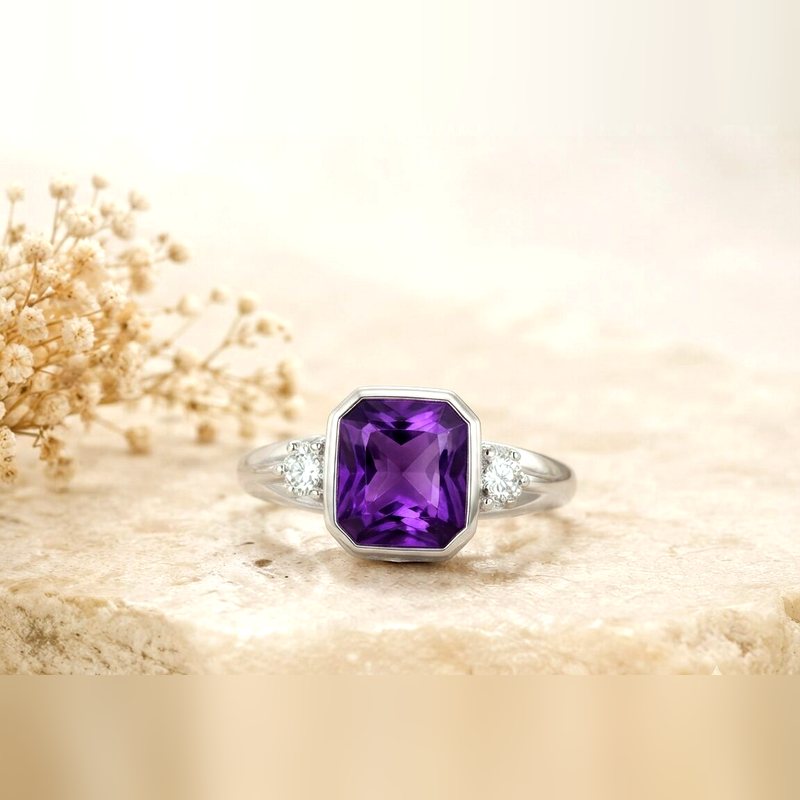
Violet, and quiet with it.
- Mineral family
- Quartz
- Colour
- Pale lilac to deep violet, transparent
- Hardness
- 7 on the Mohs scale
- Usual cut
- Faceted or cabochon
- Traditionally for
- Clarity, Calm, Strength
- Origin
- Sourced through our Jaipur partner
What it actually is
Amethyst is quartz coloured violet by traces of iron and by natural irradiation deep in the earth. The colour is often unevenly distributed in the rough, in bands or zones, and part of the cutter's job is orienting the stone so the face-up colour looks even.
How it looks in different light
Amethyst is one of the few stones that genuinely looks better under warm indoor light than in daylight, where strong sun can wash it toward grey. Prolonged direct sunlight will fade the colour permanently, so do not leave it on a windowsill.
Natural characteristics
Tone ranges from a pale lavender to a deep, almost inky violet, and colour zoning is normal. Slight differences between two pieces set with the same stone are expected.
Durability and care
Durable enough for regular wear. Warm soapy water and a soft brush. Keep it out of prolonged direct sun, and away from heat.
The full care guide covers storage, cleaning and what to avoid across every stone we set.
Traditional associations
In crystal traditions Amethyst is most often connected with clarity, calm and strength. In Vedic astrology the stone is associated with Shani, Saturn.
Wearing Amethyst
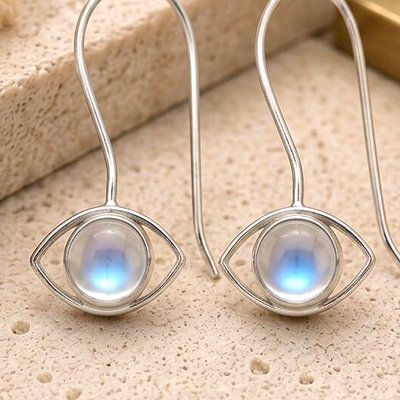
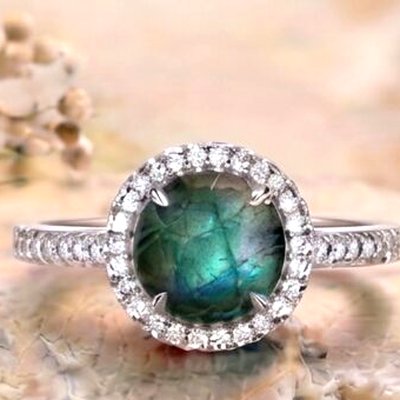
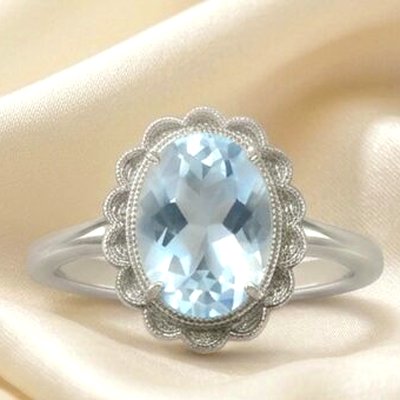
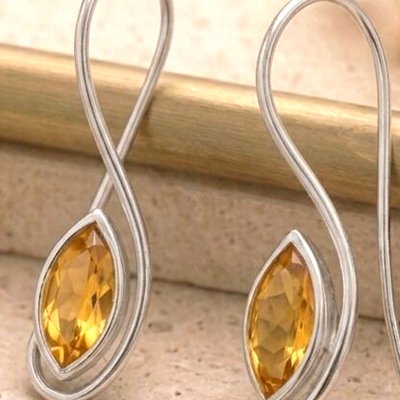
We set Amethyst in the Aperture Ring, the Crescent Stud, the Halo Drop, the Infinity Stud, the Lucent Ring, the Oculus Cuff and the Wave Cuff. Against rhodium-finished silver it reads cool and recessive, which is the point: the metal holds the stone and gets out of the way.
In this stone
7 pieces in Amethyst
Keep looking