The stone guide
Turquoise
The oldest blue there is.
- Mineral family
- Phosphate mineral
- Colour
- Opaque sky blue to blue-green, usually with dark veining
- Hardness
- 5 to 6 on the Mohs scale
- Usual cut
- Cabochon or flat tablet, cut to place the veining
- Traditionally for
- Protection, Calm, Clarity
- Origin
- Sourced through our Jaipur partner
What it actually is
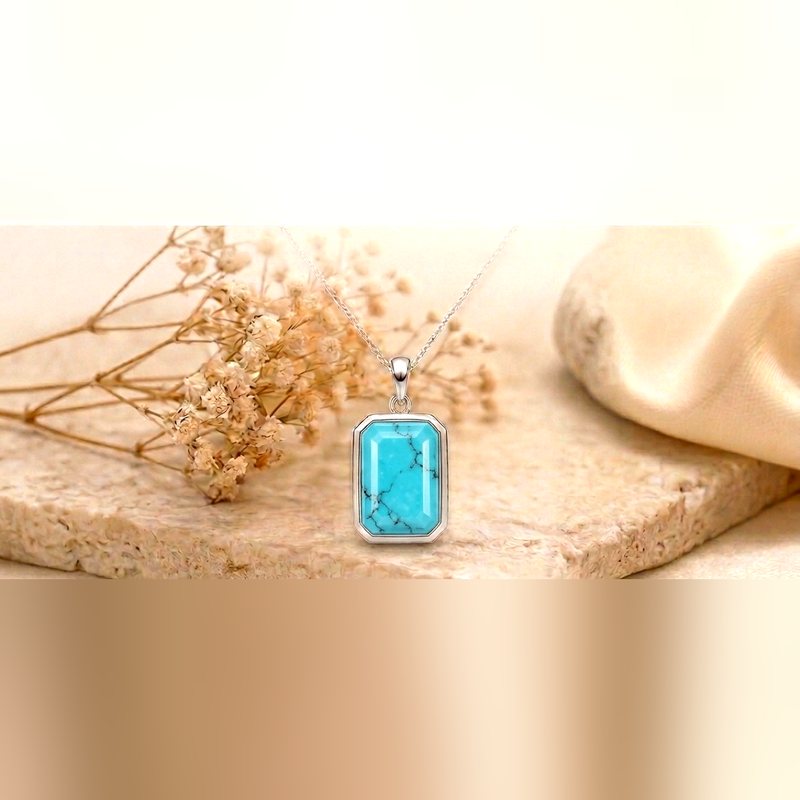
Turquoise is completely opaque, so like onyx everything happens at the surface. What makes a stone interesting is the matrix: the dark web of host rock running through it. A clean even blue is rarer; a well-figured matrix is often more beautiful, and the cutter decides which face of the rough shows it best.
How it looks in different light
Holds its colour in every light, which is part of why it has been worn for five thousand years. Slightly greener under warm indoor light, cleaner and bluer in daylight.
Natural characteristics
Colour ranges from pale sky blue to a deep blue-green, and the matrix pattern is unique to every stone. Most turquoise on the market is stabilised with resin to harden it, which is standard practice and permanent, and we disclose it per piece.
Durability and care
Soft and porous, so treat it like lapis. Never soak it. A barely damp cloth, dried at once. Keep it away from perfume, oils, cosmetics and heat, all of which can discolour it permanently. No ultrasonic, no steam.
The full care guide covers storage, cleaning and what to avoid across every stone we set.
Traditional associations
In crystal traditions Turquoise is most often connected with protection, calm and clarity. In Vedic astrology the stone is associated with Guru, Jupiter.
Wearing Turquoise
We set Turquoise in the Tablet Pendant. Against rhodium-finished silver it reads cool and recessive, which is the point: the metal holds the stone and gets out of the way.
In this stone
1 pieces in Turquoise
Keep looking