Gemstones · 6 min read
Moonstone vs Labradorite: which one feels more like you?
They are the same mineral family doing the same optical trick, and choosing between them is almost entirely a question of temperament.
If you have spent any time looking at silver jewellery set with pale, shifting stones, you have probably found yourself holding a moonstone in one hand and a labradorite in the other, unable to say why you prefer one. They look related because they are. Both are feldspars. Both do something with light that flat, single-colour stones cannot. And the specific way each one does it is the whole basis for choosing between them.
They are the same trick, performed differently
Inside both stones are microscopically thin layers of two slightly different feldspars, stacked like pages. Light enters, hits those layers, and scatters back out. Because the effect depends on the angle between the light source, the stone and your eye, it moves when you move.
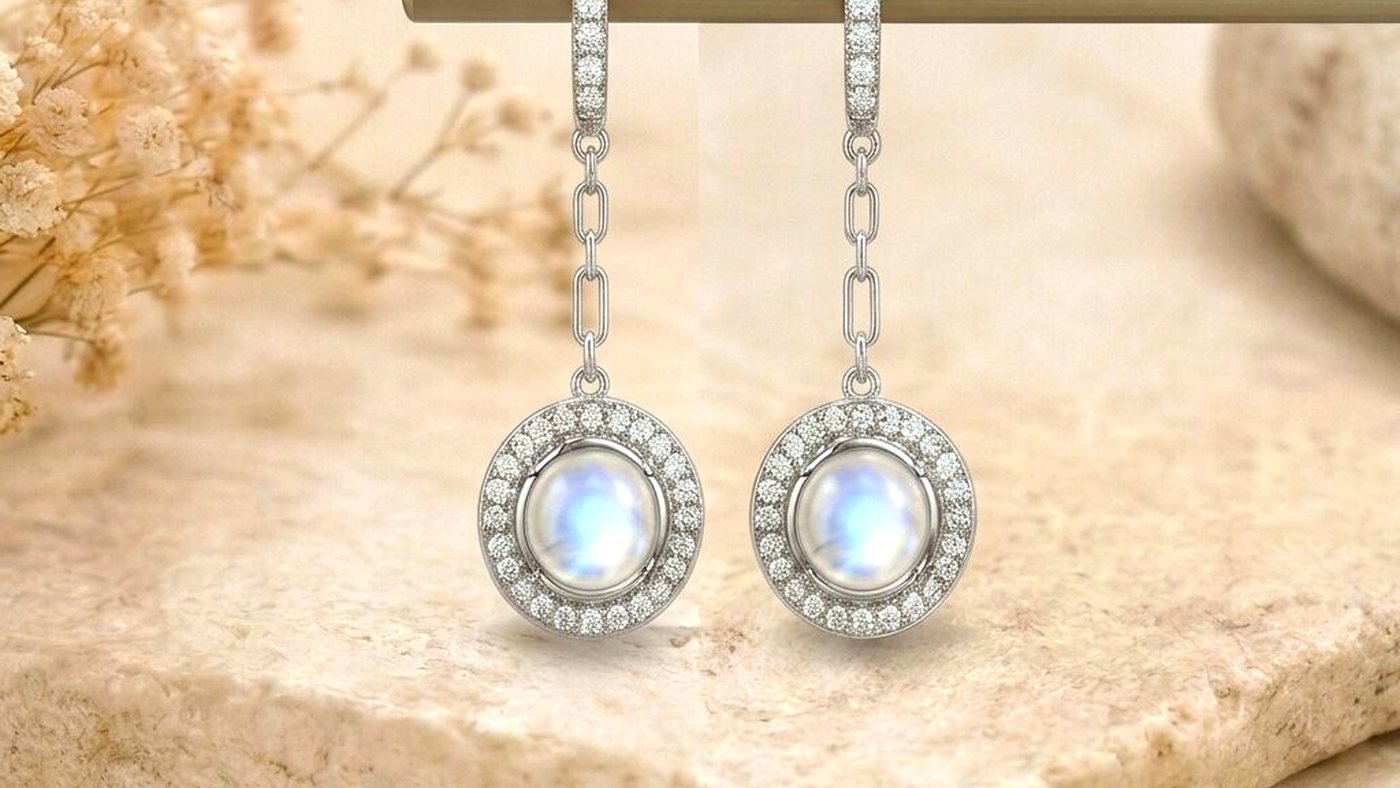
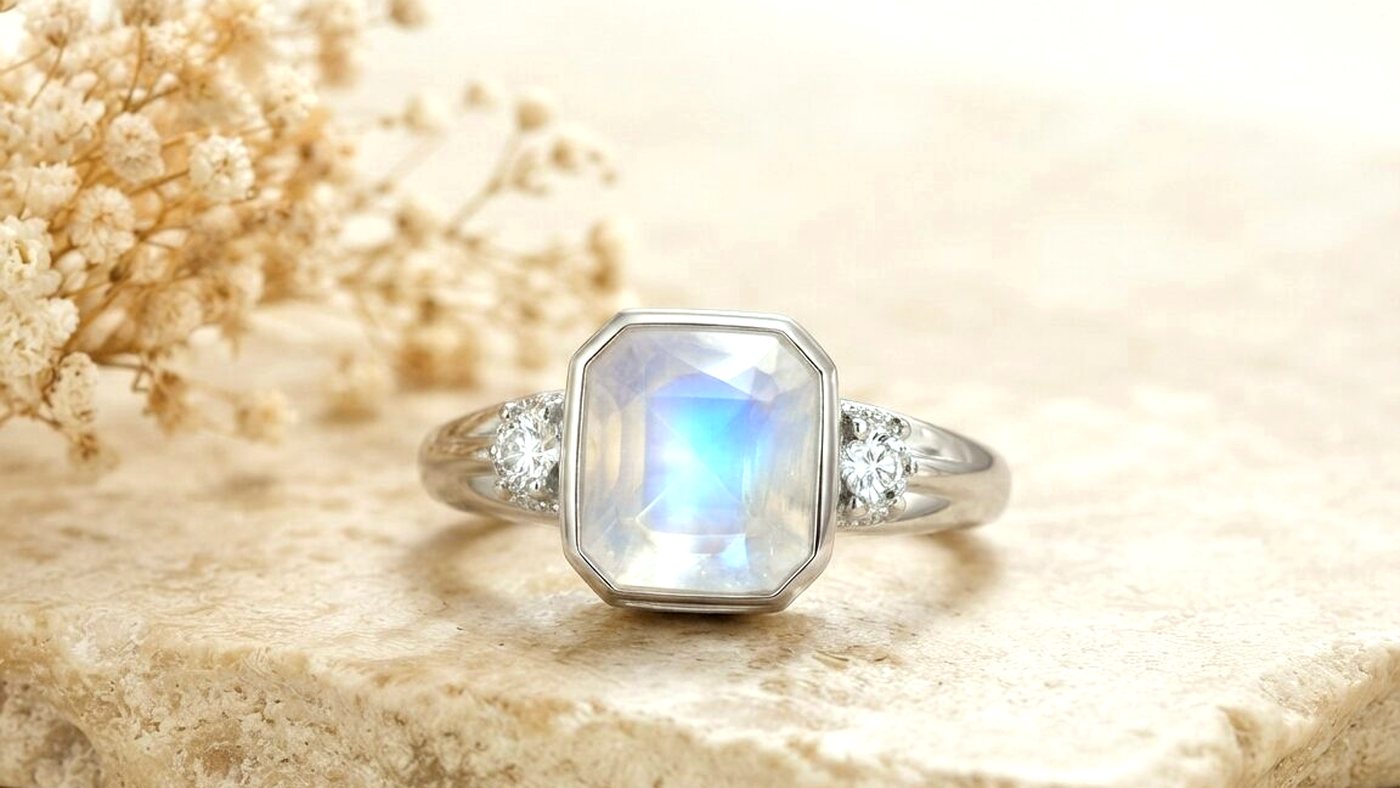
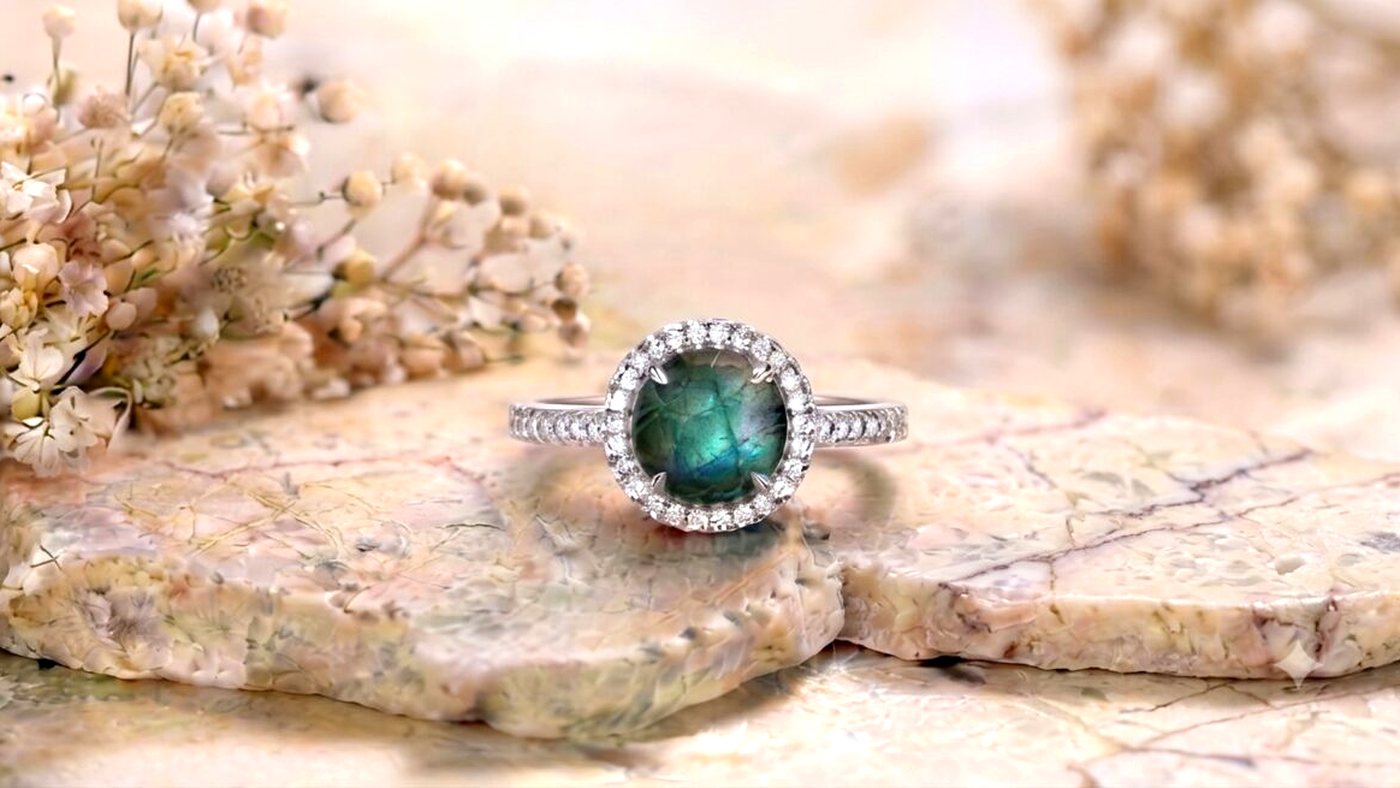
In moonstone this is called adularescence, and it reads as a soft blue glow that seems to float just under the surface, like light caught in water. In labradorite it is called labradorescence, and it reads as a hard flash of peacock blue, green or gold that switches on and off.
The mechanism is the same. The experience is not remotely the same.
The practical difference
| Rainbow Moonstone | Labradorite | |
|---|---|---|
| Base colour | Translucent white, sometimes almost clear | Grey to smoke, occasionally near black |
| The flash | Soft, diffuse, blue | Sharp, saturated, blue to green to gold |
| Off-angle | Milky white. Still pretty. | Plain grey. Genuinely plain. |
| In shade | Glows gently | Goes quiet |
| In direct light | Sharp blue sheen | Comes fully alive |
| Reads as | Light | Colour |
| Against skin | Almost disappears, in a good way | Sits distinctly on top of the skin |
That fourth row is the one that decides it for most people. A moonstone at the wrong angle is a pale, pretty stone. A labradorite at the wrong angle is grey. If you are the kind of person who will be delighted every time the flash reappears, labradorite is the more rewarding stone by a distance. If you want something that always looks like something, moonstone is the safer choice.
What this means for how you wear them
Labradorite needs a direct light source. It is spectacular by a window, under a spotlight, outdoors in low sun. Under the flat, diffuse light of most offices it sleeps. This makes it an unusually good stone for a ring, because your hands move through light all day and you will catch it constantly. It is a slightly riskier stone for earrings, where you never see it yourself.
Moonstone is more consistent and more forgiving. It works in earrings precisely because it does not need you to check on it. In a pendant or a drop earring it reads as a soft point of light from across a room, which labradorite will not reliably do.
Durability: identical, and worth knowing
Both sit at 6 to 6.5 on the Mohs scale, which is softer than quartz. Two consequences, and they apply equally to both:
- They will scratch if stored loose against harder stones. Keep them separately.
- Both are feldspars, which means both can cleave along internal planes if knocked hard against a hard surface. This is not fragility in normal wear, but it does mean taking a ring off before the gym.
Neither should ever go into an ultrasonic cleaner or a steamer. Warm water, a drop of mild soap, a soft cloth.
The bit nobody tells you
Both stones are cut as cabochons, meaning smooth domes rather than facets. This is not a stylistic choice. The flash in both stones happens at a specific depth inside the material, and a faceted cut would chop through it. A domed surface lets the light sweep across the whole stone.
It also means the cutter's orientation of the rough is everything. Two labradorites from the same block can be worth wildly different amounts depending on whether the flash was oriented to appear face-up or edge-on. This is a large part of why Jaipur matters: the cutters here have been making that judgement for generations.
So which one
A useful way to decide, having handed a lot of both to a lot of people:
Choose moonstone if you want a piece that is quietly good every day, if you are buying earrings or a pendant, if you are buying it as a gift for someone whose taste you are guessing at, or if you like the idea of light more than the idea of colour.
Choose labradorite if you want to be surprised by your own jewellery, if you are buying a ring, if grey-and-green appeals more than white-and-blue, or if you have ever described something as looking better in person.
If you cannot decide, buy the labradorite. Moonstone is easy to love from a photograph. Labradorite is the one that gets better once it is yours, which is a better quality in something you intend to keep.
In crystal traditions moonstone is associated with intuition and new beginnings, and labradorite with transformation. These are cultural and historical associations rather than medical ones, and we make no health claim of any kind about either stone.
Read the full guides to Rainbow Moonstone and Labradorite, or message us and we will send photographs of the actual stones we have in the studio this week.